ATTAINABLE HEALTHCARE
Healthcare costs are outpacing what families, schools, and small businesses can pay.
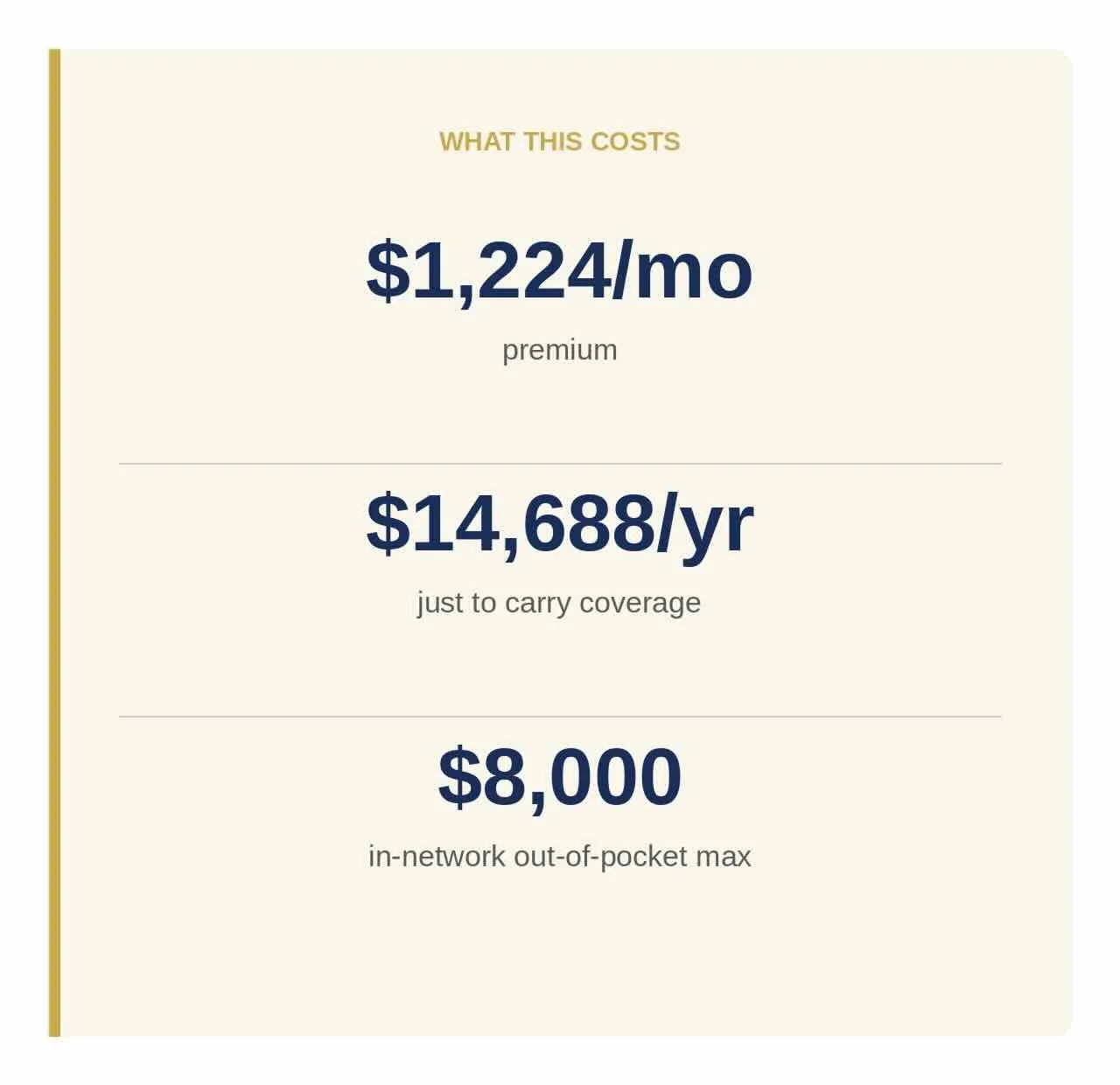
I pay close to $15,000 a year just to carry my own health insurance — and I can still face up to $8,000 in out-of-pocket costs. I understand this because I live it.
This isn't a partisan problem. It's a math problem.
North Dakota already has tools that work — reinsurance has saved policyholders real money since 2019. But even with reinsurance, coverage can still become extraordinarily expensive as people approach Medicare age. We don't need to start over. We need to protect what works and target the gaps that remain.
WHAT WOULD ATTAINABLE HEALTHCARE ACTUALLY TAKE?
There isn't one healthcare problem — and there won't be one healthcare bill that fixes it. We need to protect what already works, target the people being priced out, help small employers use tools that already exist, and pay attention to what rising costs are actually doing to North Dakotans.
01 | KEEP REINSURANCE WORKING
It's already stabilizing individual-market premiums. I'll protect what's working, keep measuring the results, and explore whether that same approach could help small-business group plans, where one employee's serious illness can drive up costs for the entire group.
Explore an income-scaled premium bridge using a portion of Legacy Fund earnings — not principal — for North Dakotans facing unaffordable premiums in the years before Medicare.
02 | BRIDGE THE 55–64 GAP
03 | HELP SMALL BUSINESSES USE TOOLS THAT ALREADY EXIST
Expand awareness of ICHRAs and other ways employers can help employees afford individual coverage. Sometimes the answer isn't another government program — it's making existing tools easier for small employers to actually use.
04 | TRACK THE REAL COST TO REAL PEOPLE
Work with the Insurance Department to track how many North Dakotans are dropping coverage as costs rise. We should know when people are being priced out before it becomes a bigger crisis, not after.
MY COMMITMENT
Affordable coverage only matters if there's somewhere to use it. A coverage card doesn't help if the hospital, ambulance service, or referral network isn't there when you need it — and in western North Dakota, that network depends on rural hospitals and strong regional referral centers.
Healthcare policy doesn't have to start with Washington or with a political party. Start with the problem, look at the numbers, and ask what North Dakota can actually do about it. I'll work with anyone serious about making that math work.